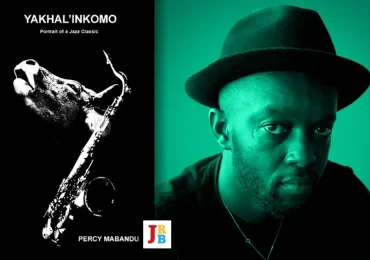
Makhosazana Xaba revisits Percy Mabandu’s Yakhal’inkomo: Portrait of a Jazz Classic ten years after its publication, and the many artists who have borne witness to Winston Mankunku Ngozi’s 1968 masterpiece.
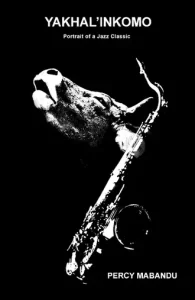
Yakhal’inkomo: Portrait of a Jazz Classic
Percy Mabandu
Dash-Art Media, 2016
In 2016 Percy Mabandu published Yakhal’inkomo: Portrait of a Jazz Classic, a 119-page book that my brain embraces with the awe it confers generally on writerly brilliance. A year later, on the first day of May 2017, we welcomed Issue 1 of Volume 1 of The JRB. I imagine the labour pains of The Johannesburg Review of Books were pounding—anticipation that newness holds as well as a mix of excitement, pride and anxiety. I read the words—
We are delighted to present the first issue of The Johannesburg Review of Books—comprising almost twenty reviews, essays, articles, stories, poems, photographs and other items.
I gobbled the contents page and sat with myself in full regret as I asked myself the question: ‘Why didn’t you write a review of Yakhal’inkomo?’ Then I took the book from my shelves to remind myself of what Mabandu wrote as he signed my copy at the launch: ‘The word is our mother!! 24 April ’16’
Mabandu’s prelude lives across ten pages. It opens…
It begins …
And then you become aware of the silence that must precede everything. You learn to see the emptiness; a dark space in a photograph, a shadow on the march of time, the def break between notes, that lapses and gas of collective public recollections. This is the absence of musicians now too far gone to speak; men too dead to remember for themselves. Then there are the fading memories of friends and families too traumatised to be troubled with reminiscing. Who will remember them now? On piano? Lionel Pillay, dead! On bass? Agrippa Magwaza, dead! On drums? Early Mabuza, dead! On tenor saxophone? Winston Mankunku Ngozi, dead! How do we remember them now? We have only their living absences, a darkness stretching over memories like a pall.
Bookish friends have endured the sound of my voice as I have read the opening paragraphs of this prelude to them over the phone, during a slow December of leisurely writing.
The four chapters: Locating Revelations, Locating Time, Locating the Man and Locating Witness. I remember thinking, ‘locating’—? What an interesting word choice. The research labour that Mabandu undertook pulsates throughout the book thus asserting the necessity to ‘locate’.
This is less of a book review, then, and more of a revisitation. It is a revisitation-cum-commemoration that hopefully encourages us to look back and remember, digest and take in the messages and lessons on the role of memory and what it really means to bestow the word ‘classic’ on a piece of music. This revisitation-cum-commemoration is a conversation with the past to hopefully nourish our present. The year 1968 birthed Yakhal’inkomo. Mabandu invited us, four decades and eight years later, to sit with Winston Mankunku Ngozi, to connect to the story on classic making.
When Xitha Makgeta opens ‘Nostalgic Jazz’ a poem of one stanza in fourteen lines (it’s not a sonnet!) with the words, ‘Jesus, jazz is us!’ and ends it with the line, ‘We sing the blues to look like the sky’, he is asserting our lived listening, as does Mabandu in his poem ‘A Portrait of a Cow’. Both poems were published in 2017 in To Breathe into Another Voice: A South African Anthology of Jazz Poetry (To Breathe Jazz) compiled, edited and introduced by Myesha Jenkins.
Portrait of a Cow
The cow
Is more than
The tilling Plough
When the land
Is perched and fallow
It is more than
Slaughtered God’s snout
Wetness; rite blood and
Smiling bride or burial sorrowThe cow
Is more than
Sure hoof and sharp horn at dawn
Dusk’s blade and healer’s hand
It is witness wail and a blessed (to)morrowIt is more than
The sound of booming blows and moaning tones
The sum of brilliant brass, fine reeds and man
The cow is sure boon as bulls that bellow
The rereading of Yakhal’inkomo naturally leads to wide-ranging conversations across artistic genres. In the acknowledgements page of To Breathe Jazz, Jenkins notes
Reedwaan Vally at Real Publishers took a big leap of faith in publishing a ‘poetry book’. But he willingly accepted my idea that this anthology was a history book: a textbook documenting this current period of writers and jazz musicians. Importantly, he was willing to experiment with new ways of publishing.
Mabandu’s Yakhal’inkomo is a book on the contemporary history of jazz; and, through it, we connect with our past with ease because the track Yakhal’inkomo has been the sound in the air we have been breathing for decades.
The first chapter—Locating Revelations—opens with an epigraph, Seitlhamo Motsapi’s poem
Tousan
…
while revelations rustle
from the drum’s poundations
prophecies stitch up the perforationsfrom inside the horns
rumours of rain
limp towards the desert
This is a musician’s chapter. Mabandu delves deep into the technicalities of music-making and presentation in ways that I had difficulty understanding fully. I simply enjoyed his method of discussing such and had fun reading with a warm comforting mist around my musically challenged brain. In this chapter is a long conversation on how the title was arrived at and who first suggested it. One of the perspectives:
Mankunku may have arrived at the title of his masterpiece by chance. However the music he created combined with that title to generate a force that has since gone on to lift his composition into larger cultural and artistic significance. The motif of a bellowing beast is central to the song’s meaning. To understand this we must appreciate the symbolic power of the cow as a feature in the economic and spiritual cultures within which Mankunku was raised. This is at the heart of the meaning and message of Yakhal’inkomo.
Mabandu’s referencing of Seitlhamo Motsapi’s poem reminded me of another poem by Motsapi also in his collection earthstepper/the ocean is very shallow, published in 2003. It is titled ‘sikis’ and the first two stanzas read
a soul’s throw
from the forest
anthems peel off
the faces of woundsfrom the rock
our shoulders flow into
murmurs the sprout
of callings & onenesses
Yakhal’inkomo is of course an anthem that became the rock in 1968 that we sit on as our shoulders flow, to this day, and thus: the callings and onenesses.
The second chapter—Locating Time—is a music historian’s delight. In discussing the 1968 birth of Yakhal’inkomo Mabandu goes beyond discussing local musicians of that time and positions South Africa within the wider world.
1968 reverberates across the ages as the year the whole world appeared to be coming apart at its fragile seams. The was prone northern hemisphere had yoked the globe with the threat of a nuclear annihilation. Then there was the bloodletting: the assassinations of African American civil rights leader, Martin Luther King Jr. who was gunned down on the balcony of a motel in Memphis Tennessee, US sparking race riots that claimed more lives.
The killing of the American presidential candidate, Robert F. Kennedy, just weeks ahead of Mankunku recording date sent shudders across the western world. The Vietnam war was also raging, Paris, the French city of love was burning with the rage of student protests that sparked a nationwide strike. It has spread to involve over 20 percent of the workforce demanding reforms from the state.
From the history of music in South Africa to the politics of the world at large, Mabandu then returns to South Africa and discusses the political changes of the time as Black people’s opposition and resistance to apartheid intensified and the complicity of whites was exposed. Mabandu also tells the story of the white ‘free spirited’ poet who died by suicide; Ingrid Jonker, the daughter of Abraham Jonker, who was responsible for censorship in the Nationalist Party government. He uses this specific example of the poet’s suicide to make this crucial point, that Jonker’s ‘…short and tragic life also symbolised the impossibility of freedom for everyone living in South Africa, even the white people in whose name the minority government was ruling’.
This chapter ends with the paragraph:
All these historic musical achievements were part of a fundamental existential change in the way oppressed black people in South Africa and elsewhere had started to articulate how they saw themselves. Jazz music had become part of a cultural grammar with which to shape a new and enlarged way of being. Jazz music had also emerged as the sound of democracy. The music would swing and boom as a bulwark against the entropy, tyranny and all ideas that sought to hold down the human spirit.
Chapter three—Locating the Man—offers lessons in life writing. Mabandu informs us that ‘Mankunku suckled his love of music from his mother’s breast’. Mankunku’s mother Getrude sang in the church choir. The fascinating details on Mankunku’s childhood and teenage years suggest that he was destined to be a maker of classics. This is the longest of the four chapters. Mabandu contextualises Mankunku’s early life in the politics of the period, which had wide-ranging impacts, in particular apartheid’s forced removals, which affected thousands of Black people.
In this chapter Mabandu also quotes Dinga Sikwebu, Kevin Davidson, Jazz Collector and Fitzroy Ngcukana who offer their perspectives on Mankunku. Immediately below these comments Mabandu meditates:
How is it possible that Winston Mankunku Ngozi could be beset by such shyness that he would almost cry whenever pressed to talk about his music? To be so delicate and self effacing and yet also be known to have ferocious inability to suffer fools. He would also be locked inside himself that it would almost be impossible to know whether he was in pain or happy.
In this chapter Mabandu also presents the wide-ranging debates about ‘originality’ of Mankunku’s saxophone rendition of Yakhal’inkomo and cites many commentators, including African American Salim Washington, who asserts:
It is true that he [Mankunku] is influenced by Coltrane. But that is true of such stalwarts as Pharoah Sanders, Wayne Shorter, and a host of others. In fact, it is not much of a stretch to say that almost all important tenor saxophonists born after Coltrane are influenced greatly by his sound and other aspects of his playing as well. That being said, when listening to Mankunku I do not get the feeling of a first rate imitator as I do when I listen to such famous saxophonists as say…the late Michael Brecker or Dave Liebman. Rather Mankunku does add specific aesthetic touches that are recognisably South African. Of course, there is much overlap in the aesthetic and political sensibilities of South Africans and African Americans and thus the similarities.
One of the commentators Mabandu cites is the late South African Poet Laureate Keorapetse Kgositsile. Reading Kgositsile’s opinions reminded me of how surprised I was, when I first read his collection This Way I Salute You, that Mankunku was not on any page. Kgositsile’s is an impressive collection that honours artists and jazz musicians and ‘… sings with its own subtle musicality’.
Locating Witness is the final chapter: on us. It is a chapter on memory, on pride and on the power of witnessing, broadly conceptualised.
We know of Yakhal’inkomo and its magic because we see its traces in those who have been touched by it. Those who have been moved by its force have left evidence of their dance. Mankunku’s creation is in the things they themselves have made and songs they have turned. Some have painted the sounds of its cry and lent it to their own visions of the world. We know that Yakhal’inkomo is because others have borne witness to its facts. In fact, Mankunku’s bull bellowing is itself an act of bearing witness. It is the man’s aesthetic testimony of the horror and hope he sought to uncover in the world.
Mabandu discusses examples of poets, artists, musicians that have borne witness and responded: Dumile Feni, Mongane Wally Serote, Miriam Makeba, Thembi Mtshali, Ndaba Mhlongo and The Coronets, Sibongile Khumalo, Nomfundo Xaluva and Ayanda Mabulu, Kevisan and The Lights, Sjostedt and the ‘more young jazz players’, Nduduzo Makhathini, Lindiwe Maxolo, Masello Motana and Sisonke Xonti.
In his debut poetry collection, Yakhal’inkomo, first published in 1972, Serote wrote about his witnessing:
I once saw Mankunku Ngozi blowing his saxophone. Yakhal’inkomo. His face was inflated like a balloon, it was wet with sweat, his eyes huge and red. He grew tall, shrank, coiled into himself uncoiled and the cry came out of his horn.
Not one poem in this collection of 43 poems is titled ‘Yakhal’inkomo’, Serote wrote the above in what could be called a prelude, one that has been quoted repeatedly by others. He was sharing his own rendition of the politics of the time, the very politics that Mankunku’s saxophone bellows. Serote had been imprisoned without trial for his political activism in 1969 ,after which he left South Africa and ended up studying at Columbia University, New York. In 1975 Serote’s Yakhal’inkomo won the Ingrid Jonker Prize for Poetry.
Mabandu references Serote’s poem ‘Hell, Well, Heaven’ and excerpts the stanza that has Mankunku’s name in the line: ‘But Brother, Was that Mankunku’s horn?’ Commenting on this line Mabandu posits:
The line … registers a redemptive paucity of despair. It is followed in the subsequent lines by a willed endurance. The poem unfolds in a similar rhythm of pain and hope, ebbing and flowing like day follows night or new birth defies every death. The poet resolves his moment of dislocation with the sound of ‘Mankunku’s horn and Dumile’s figure’.
There is another poem in Serote’s Yakhal’inkomo that performs an overarching function of capturing the political volatility of the times that incited the bellowing of humans. Its title of three words separated by full stops stands out, demands attention:
Movement. Moulding. Moment.
The sun has slept,
There are no more shadows following anything,
The fright is gone undercoverOf darkness.
The night throbs,
Though the silence of the footstep of a shadow
The truth hides, only seen by the starsOf darkness.
Something is breathing,
There is a silent life in the light walking to the horizon.
The moon follows the sunOf dawn.
Creatively moulded, this poem marks movement with the opening of each stanza from the sleeping sun to the throbbing night and the breathing something, and the breathing delivers the dawn moment because the moon has followed the sun. Metaphors packaged with distinct precision to assert a distinct reading of the politics of the period!
Sounds of a Cowhide Drum is Oswald Mbuyiseni Mtshali’s debut poetry collection, published in 1971. It has also acquired the status of a ‘classic’, having sold thousands of copies in the USA. This collection is also a commentary on the impact of apartheid in that time.
What is impossible to ignore is how the cow is centred in both titles, Yakhal’inkomo and Sounds of a Cowhide Drum/Imisindo Yesigubhu Sekhumba Senkomo. For the latter, the 2012 translation now sits side by side with the 1971 English poems. In 1966, Miriam Makeba released Jolinkomo. Each time I heard the song on radio I wondered what the lyrics meant, as isiXhosa was a ‘foreign language’ then. In 1977, Mafika Pascal Gwala released his debut poetry collection, Jolinkomo. In all these examples—the cow centred creative cultural practices while resisting and challenging racism! I imagine scholars have written on the cultural significance of a cow in the lives of Black people in South Africa.
The last stanza of Mabandu’s own poem ‘Portrait of a Cow’ is worth revisiting:
It is more than
The sound of booming blows and moaning tones
The sum of brilliant brass, fine reeds and man
The cow is sure boon as bulls that bellow
The scholar Michael Titlestad’s 2004 Making the Changes: Jazz in South African Literature and Reportage discusses Ngozi over two pages and argues, ‘This notion, that the saxophone has the capacity, as an instrument of witness, to give voice to the irruptive sorrow of oppression, is both recurrent and persuasive in South African representations of jazz during the 1970s’.
Going back to To Breathe Jazz, ‘Power in the Music’ is the title of the first section, wherein Jenkins writes:
The part, a person, a place, an incident, an idea….whatever that memory is, it’s special and strong enough to survive the millions of things we witness and experience in a lifetime. The memory that comes with jazz has a power to change our lives, if not the world.
Mabandu and Jenkins are in agreement.
‘Noted’ by Sedica Davids, also published in To Breathe Jazz, ends with this stanza:
Jazzed memories
Jaded dreams
And muted musings
Are all cached
Where missing a beat
Makes music
The stanza performs the fascinating function that can also be easily interpreted as a summary of Mabandu’s witnessing chapter of Yakhal’inkomo. Yes, your witnessing is noted, Sedica Davids!
A more recent witnessing is the March 2022 – January 2023 exhibition curated by the artist Bongi Dlomo, titled Yakhal’ Inkomo. The exhibition was a collection of artworks that Dlomo had collected from 2017 to 2019 on behalf of the Javett Foundation. It was ‘a unique and educational assemblage of over 100 classical twentieth-century artworks produced by Black artists in South Africa’. It felt very special to walk through the gallery, witnessing, as Yakhal’inkomo tunes bellowed privately and happily in my head.
In the 1960s I too bore witness to Mankunku’s Yakhal’inkomo, when I was enamoured to the music by our elder brother Sikhumbuzo and his friends, who often sat outside around a radio looking so serious that they stopped talking and simply listened. At eleven I didn’t understand why the bellowing of a cow needed to be represented through music, without words. I concluded then that the only reason he loved this song was because he shares a name with the saxophonist. Sikhumbuzo’s school name is Winston.
Decades later, as I sat at the Market Theatre listening to Sibongile Khumalo sing Yakhal’inkomo, I surprised myself with the thought: We do not need those lyrics! It occurred to me then, that I had not been conscious of how the original version—the bellowing sound of my childhood—the classic, had found a home in my skin. The bellow had taken possession of me too, without my permission.
Meaning making. Memory murmurs. Witnessing. Trajectories.
Ten years of this! Mabandu ends the book with this paragraph:
The song takes possession of them too and helps articulate the troubled state of the world. The song and its bellowing bull, sounds out messages of witness like a ghost stalking the darkness that is over the world. The song becomes something of a spirit hovering over the face of the deep and across the waters; connecting with ghastly happenings beyond the black life on the African continent, crossing the Mediterranean and the Atlantic oceans into Europe and the America. Bearing witness, Yakhal’inkomo.
~~~
- Makhosazana Xaba is a Patron. Xaba is an author, translator, and poet. She has written four poetry collections, these hands, Tongues of their Mothers, The Alkalinity of Bottled Water and The Art of Waiting for Tales. Her debut short story collection, Running and other stories, was a joint winner of the 2014 South African Literary Awards and Nadine Gordimer Short Story Award. Xaba has edited several books, including Our Word, Our Worlds: Writing on Black South African Women Poets, 2000–2015, Queer Africa: Selected Stories (with Karen Martin) and Noni Jabavu: A Stranger at Home (with Athambile Masola). Her latest book is Izimpabanga Zomhlaba, an isiZulu translation of The Wretched of the Earth by Frantz Fanon.