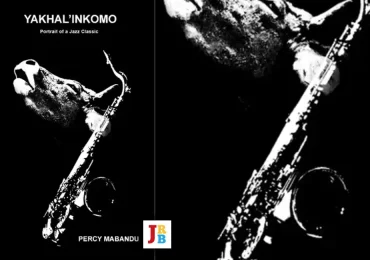
Makhosazana Xaba talks to Percy Mabandu about the tenth anniversary of his book Yakhal’inkomo: Portrait of a Jazz Classic, Winston Mankunku Ngozi’s 1968 masterpiece, and what it means to write as a witness.
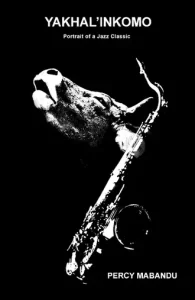
Yakhal’inkomo: Portrait of a Jazz Classic
Percy Mabandu
Dash-Art Media, 2016
~~~
Makhosazana Xaba (MX): Congratulations on this ten-year anniversary of Yakhal’inkomo: Portrait of a Jazz Classic! While writing the review I read the opening paragraphs of your ‘Prelude’ over the phone to a few friends who share my fascination with writing. Firstly, how does it feel, ten years later?
Percy Mabandu (PM): Thank you for this opportunity to think together and drink in the view of this short distance travelled. To be honest, I have not been thinking about the book in these terms. In my imagination it is always in service to the record. As a result I’ve been thinking about how in two years, Bra Winston Mankunku Ngozi’s historic record, Yakhal’inkomo, will be 60 in 2028. I’ve been busy thinking about activating the book and some of the artworks I created around the theme for that anniversary. I think this is because I’ve always thought of the book as an offering, an exercise in thanksgiving to Mankunku and his band for the music.
MX: ‘The Winter of 1968’ is the title of a found poem I decided to source from pages 12 to 17 of your Prelude. (The title is from page 19.)
The Winter of 1968
The beginnings gave way to the music: insistent & ebullient.
It is alive. Like death. Like hope. The music is a reminder.The music is the sound of smiling babies, birds chirping
the chill of a new dawn. Here, then, man & beast are one in a metaphor.
They are unified in a kind of witness to slaughter.Yakhali’inkomo the anthemic title track is where the record’s alchemy & power are packed
The anthem can also be said to be an invitation to the listener to imagine on one hand
On the other hand, it calls us all to meditate on those who come to witness the slaughter
The bellowing bull is their acknowledging cry, their ritual of witness & potential to live &
die another day.
PM: Thank you for picking up on the poetic ambitions of the work. This is heartening because, from the start, I tried to keep the writing guided by the ear. Among my North Stars on the journey were poets like Michael Ondaatje and Keorapetse Kgositsile, for instance. I was interested in the musicality of the word. This is why it was natural to work with a band to do the readings and performances of the text. The word is a sound.
MX: Please summarise this ten-year biography of your book.
PM: To be honest, I have no sense of a milestone. I am looking towards how to restate the mission of the book in 2028.
MX: How would you describe your book through the lens of your last chapter, ‘Locating Witness’?
PM: The chapter, ‘Locating Witness’, was about tracking those who’ve been touched by the power of Yakhal’inkomo. These are artists and musicians who, like me, have been moved to either re-record the classic, reinterpret it, or create new artwork decidedly inspired by the life force of Mankunku’s masterpiece. It’s a gathering of witnesses. In this way, my small book should be seen as my attempt to bear witness to an important part of our culture. It’s a way of locating myself as a witness to the great creative humanity of Winston Mankunku Ngozi and the importance of his work.
MX: When did you first hear the tune Yakhal’inkomo and what is your memory of its initial impact on you?
PM: Yakhal’inkomo, the song and the record, feels like it has always been there. It was part of the atmosphere I grew up in. In this way, I don’t remember a singular moment. I remember multiple instances when the sound of Yakhal’inkomo’s melody gave meaning to myriad moments that I remember about growing up in the home my late parents had created. The warmth of these memories also includes our neighbours. These are personalities beyond our household, but whose humanity is central to the economy of meaning of the culture of our block or neighbourhood. It’s who I think of when I hear the phrase: On’se Mense (our people), or Dladleng (home).
I think of Yakhal’inkomo as a song being a kind of place or site. My memory of its impact on me is not separable from my memory of my childhood and home. It’s much more than just music, you know?!
MX: When and why did you decide to write this book?
PM: Towards the end of my tenure at the City Press, around 2013. I began thinking that I needed a project to focus me as a writer and as a journalist interested in art history and jazz music. My thinking was urged on by a growing feeling that we should be doing the work of memory management and producing the history we want to read, but cannot find. I had then also been living with a memory of a conversation I had in 2009 with saxophonist Salim Washington about our shared love for the late great Winston Mankunku Ngozi and his masterpiece, Yakhal’inkomo. The stars aligned, and I knew the project would be a book on Yakhal’inkomo. It had to be.
MX: Reading the book suggests that the research took some time. Please describe your research journey and share the challenges and surprising pleasantries.
PM: To be honest, the muse was in charge. I tried to allow the search for information to flow as naturally as I could. There’s a conversation with trumpeter, Feya Faku, which unfolded on a drive to Makhanda from Gqeberha airport, for instance. Our conversation was warm like a chat with an older brother or uncle huddled over the family hi-fi set to enjoy a new record; devoid of pretences to journalistic detachment. My visit with the Ngozis in Gugulethu was the same. I tried to keep that warmth even when I was doing research into written historical sources. This slowed my process down, and that was a good thing.
MX: What makes a piece of music a classic? Put differently, are there well-known, verifiable criteria used to rate/judge a piece to arrive at this conclusion? I imagine there should be, so please share these.
PM: I think there’s a common understanding that a work of art is considered a classic when it best displays the artist’s mastery of his medium, and the work has a profound lasting impact and influence on the direction of other works that follow in its wake. I also think that there are works of art that provide for other, more important needs of a culture at a particular time in history. This goes beyond the artist’s technical facility. It’s about the work’s usefulness in the nourishment of those included in the imaginary we call, We The People.
MX: Other writers have used the words: anthem, blockbuster, legendary, masterpiece, and ‘seminal’. It seems to me (as someone clueless about music) that the use of ‘classic’ suggests a far superior rating compared to these words. What’s your take on this?
PM: This is a question about language, the discipline with which we deploy words. I think people are often clumsy in the way they deploy language. We need to be more deliberate with our use of descriptors like this. Otherwise, we will not be able to improve the quality of discourses on these important landmarks of our culture. I like the word ‘masterpiece’ too. This is because I am also a visual artist, and that word carries meaning in art history. Words like ‘blockbuster’ are more about sales success and so on. Yakhal’inkomo has had a lasting impact on culture even beyond music. I think Classic and Masterpiece are fitting descriptors.
MX: In the brief biography that you share, you inform us that Getrude (Getty), Mankunku’s mother, sang in the choir and was the main musical influence on her family, not Percy, the father. What was Getrude’s surname before she married Percy?
PM: My research interest in Mam-Getrude (Getty) was centred on her to the extent that she was Ma’Ngozi the loving wife of Percy Ngozi, and as we’d say, mama ka Mankunku. There are other bits of research about the family in Makhanda in the Eastern Cape that I left out of the book. I have been workshopping the idea of writing a full biography of Winston Mankunku Ngozi. These broader details about his extended family would find fuller expression in that book.
MX: In the chapter ‘Locating Time’ where you first mention Sathima Bea Benjamin we read: ‘There he (Dollar Brand later Abdullah Ibrahim) met African American Duke Ellington in 1965 through Sathima Bea Benjamin. The encounter marked an important turning point in Ibrahim’s musical career and life’ (p. 66). On this page you spelled her name as ‘Satima’. Later, in the chapter ‘Locating The Man’ where you discuss jazz culture in Cape Town you introduce readers to Benjamin in this way: ‘Betty Benjamin who would later be known as Sathima Bea Benjamin—she would later marry Dollar Brand (Abdullah Ibrahim) with whom she left the country for Europe and later the United States’ (p. 81).
To all the names before and after Benjamin’s name in the section, you link their specialisation in music. For instance: ‘Brian Welsh on piano, Meron Barrow on vibes, Cecil Ricca on drums’ and more. Nowhere do you inform readers what Sathima Bea Benjamin’s role was in jazz music. I am curious about this repeated absence. Why did you make this choice where she seems to be relevant only in relation to Dollar Brand/Abdullah Ibrahim?
PM: I think this is an interesting and important observation. To be sure, my narrative priorities here were not focused on her musicianship per se, but on her agency as a facilitator of opportunities for the band. She was their manager, really. It was through her business savvy that they secured Duke Ellington’s release of Ibrahim’s Trio on the then-newly established Reprise Records. Her musicianship didn’t need canvassing as such. This is, after all, the vocalist Robin D.G. Kelley once called South Africa’s greatest jazz singer and one of the best the world has ever known.
MX: Gwen Ansell is a South African jazz journalist whose book Soweto Blues: Jazz, Popular Music, and Politics in South Africa (2004) you referenced on pages 79 and 90. In both instances, you do not share with readers her first name ‘Gwen’ and the book’s title is only mentioned as ‘Soweto Blues’. Her full names and full book title only appear at the end in the ‘Select Bibliography’ section. Ansell’s specialisation as a jazz journalist (among others) is unique, in my view. This leads me to the same point and question above: I am curious about your choices of presenting Gwen Ansell.
PM: Sis Gwen is actually first introduced to readers in the acknowledgements. I note her as a key influence whose counsel is central to the realisation of the book. Her spirit is all over the project. For me, Gwen Ansell is so central to jazz writing that I am convinced we can refer to her with a single-word name signpost, and confidently assume the meaning is understood. At least to my readers. Just as when we say: Miles, among jazz people, or Ramose among Pan-Africanist legal philosophers. The same can be said about Soweto Blues. It’s that kind of landmark text.
MX: Sarah Bery. On page 73, we read: ‘Sarah Bery has called this an existential reality that demands black existence and presence but simultaneously constructs blacks outside humanity’. There isn’t a single identifier for Sarah Bery, someone you considered worth quoting! Is Sarah Bery a musician, a jazz journalist, a scholar of music, a South African, an African American? How are we as readers meant to understand the context of your citation? Was this a deliberate omission? If yes, what were your reasons? If not, please share her identifiers.
PM: This is true not only with Sarah Bery but with Lewis R. Gordon, too. They are in the section in the book that invokes a lot of Africana Existentialist language. It’s one of these bubbles in the text where I move with this kind of assumption or expectation that my readers come loaded as discursive insiders, and they will find their way.
MX: What other South African books do the same work that Yakhal’inkomo does? Bongani Madondo’s book on Brenda Fassie, for instance, is a portrait of the person, not her music, and two chapters in that anthology focus on ‘Weekend Special’, the classic. While Pumla Dineo Gqola’s A Renegade Called Simphiwe is on the artist, Gqola also dedicates some writing on the audiences’ responses to Dana’s music, which speaks to your last chapter ‘Locating Witness’. In the more recent Inyathi Ibuzwa Kwabaphambili: Theorising South African Women’s Intellectual Legacies (2024) edited by Babalwa Magoqwana, Siphokazi Magadla and Athambile Masola, Masola introduces a section of six chapters with the words ‘…the chapters centre on creative production as intellectual work’ (p. 89)
PM: There’s also this lovely book by Phehello Mofokeng, A Note To Taiwa. He writes not so much about the late great pianist and composer, Moses Molelekwa’s life or a particular song or record. Mofokeng explores the emotional impact of Molelekwa’s music in general. I think that’s an interesting take because it reminds us that art lives by the way it makes us feel. It’s really about how everyday people live with the music they love.
MX: In the chapter ‘Locating The Man’, you quote four people—Dinga Sikwebu, Kevin Davidson, Jazz Collector and Fitzroy Ngcukana—who commented on Winston Mankunku Ngozi. I am curious about the specific methodology: had you interviewed them? If so, were these verbal interviews that you then transcribed or were they written interviews as ours? Might these be quotations from their own writings? If these quotations are from their own writing, then please share the titles of the original texts.
PM: I met with them in person. Kevin and I both lived in Midrand at the time. We met at a nearby restaurant for the chat. We also got together at Tshwane University of Technology’s Art campus, where he was still teaching at the time. He is one of the best musical scholars on Mankunku’s work. His transcriptions of Yakhal’inkomo were helpful for me. I sat with Fitzroy Ngcukana at Nikki’s Oasis in Newtown. He was very generous. Boet Dinga Sikwebu sat with me a few times. Once at the old African Freedom Station and in Makhanda at the National Arts Festival. My approach was more journalistic than scholarly. I wrote notes and recorded our chats on the small handheld dictaphone. It was important for me not to have the formality of the occasion get in the way of ease of conversation.
MX: My limited experience with jazz over the decades has led me to conclude that jazz in South Africa is a male-centric/masculinist genre. What is your response to this reading?
PM: I think the conversation about the dominance of male musicians in the development of jazz music is not a uniquely South African issue. It’s also not unique to music. I think it’s a symptom of the way our world was formed when we entered modernity. Though women’s boxing first appeared in the Olympics as a demonstration sport in 1904, it wasn’t until the London 2012 Olympics that it was officially recognised as an Olympic event. So, we need careful thinking here. Women have made important contributions to the development of jazz music.
There are a lot of questions to ponder: Why have women traditionally been mostly celebrated as singers and less encouraged to play instruments? But also, when one thinks about the material quality of life in the 1920s through the 1980s, the decades when much of the music was developed, I have often wondered whether the punishing demands of life as a jazz musician acted as a disincentive for women historically. Now, we have better touring infrastructure, almost no taboos and less stigma for women associated with the itinerant lives of musicians. Like you, I have more questions than answers. I can only offer speculative explorations of the symptoms.
MX: The detailed discussion on Winston Mankunku Ngozi ‘copying’ the African American jazz saxophonist and composer John Coltrane was fascinating. What is your own view on this?
PM: Now, John Coltrane is the father figure in jazz lore. He is the hornsman by whom all modern and contemporary jazz saxophonists are judged. Just as he had to learn from Coleman Hawkins and Lester Young before him. The story of jazz is also a kind of procession of giants. Coltrane, too, had to pass the torch to younger would-be leaders on the instrument in jazz. There were some real contenders to the throne. Prominent among these young lions was Wayne Shorter, of course. If you were looking at this conversation from South Africa, Mankunku had the pre-eminent claim. There were other real voices like Barney Rachabane, Ezra Ngcukana and others. So, Mankunku was in no way ‘copying’ Coltrane. He was inheriting the tradition.
MX: Thank you for agreeing to be interviewed. Let’s end with another found poem from the final paragraph of the book, (p. 117) simply titled:
Yakhal’ inkomo
The song takes possession of them too
The song and its bellowing bull
The song becomes a spirit hovering over
the face of the deep and across the waters
Bearing witness, Yakhal”inkomo!
PM: … a better world is possible and when the record turns, I can hear it Yakhal’inkomo!
~~~
- Percy Mabandu is a South African writer, artist and communications professional. He is the author of Yakhal’inkomo: Portrait of a Jazz Classic. He is interested in life at the intersection of art, jazz and the political economy. His arts journalism, in print and broadcast, has been published on platforms including New Frame, Departures Magazine, the Mail & Guardian and SAfm. He lives in the City of Tshwane.
- Makhosazana Xaba is a Patron. Xaba is an author, translator, and poet. She has written four poetry collections, these hands, Tongues of their Mothers, The Alkalinity of Bottled Water and The Art of Waiting for Tales. Her debut short story collection, Running and other stories, was a joint winner of the 2014 South African Literary Awards and Nadine Gordimer Short Story Award. Xaba has edited several books, including Our Word, Our Worlds: Writing on Black South African Women Poets, 2000–2015, Queer Africa: Selected Stories (with Karen Martin) and Noni Jabavu: A Stranger at Home (with Athambile Masola). Her latest book is Izimpabanga Zomhlaba, an isiZulu translation of The Wretched of the Earth by Frantz Fanon.